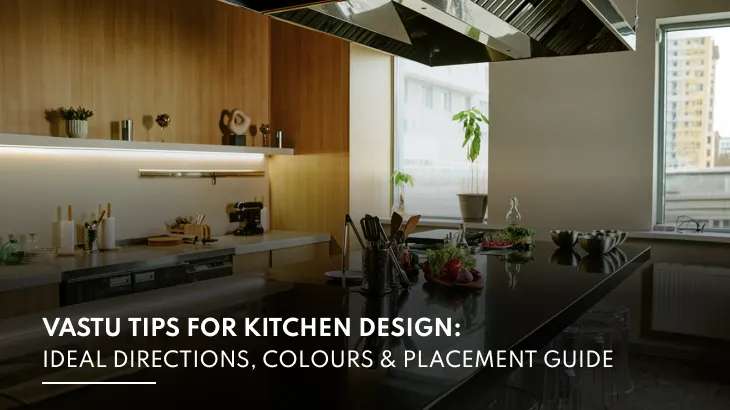
The kitchen is not just where you cook; but in Vastu Shastra, it is one of the most energetically significant rooms in any home. Vastu tips for kitchen have moved firmly from traditional households into the conversations of modern urban apartment buyers, and the numbers back that shift up emphatically.
It is found that nearly 80% of homebuyers in India consider Vastu compliance a key factor in their purchasing decision. Another research shows 62% of buyers actively prefer Vastu-compliant properties with 44% willing to pay a premium for them. For those exploring premium apartments for sale in Bangalore, understanding Vastu kitchen tips is one of the most practical ways to ensure your new home supports your wellbeing from day one.
What Is Vastu Shastra for Kitchen Design?
Vastu Shastra is a 5,000-year-old Indian science of spatial design rooted in aligning architecture with the five natural elements: earth, water, fire, air, and space. The kitchen, above all rooms, is governed by the fire element – Agni. Kitchen Vastu Shastra is the specific application of these directional and elemental principles to the planning, placement, and colour of cooking spaces.
Contemporary Vastu practitioners are quick to emphasise: this is not superstition. A kitchen planned with Vastu logic tends to have better natural ventilation, more effective light, fewer thermal conflicts between cooking and storage zones, and a layout that feels intuitively comfortable to work in. The logic is ancient; the benefits are practical.
Importance of Kitchen Placement According to Vastu
The importance of kitchen placement in Vastu extends beyond spiritual symbolism. A kitchen positioned in the wrong directional zone can create genuine functional problems: poor cross-ventilation, inadequate natural light, or thermal discomfort that accumulates over years of daily use.
For apartment residents, kitchen placement considerations include the cook’s facing direction, the position of the stove relative to the sink, the placement of storage, and the orientation of the cooking zone within the broader floor plan.
Ideal Kitchen Directions According to Vastu
The best direction for kitchen as per Vastu is the South-East – the zone governed by the fire element (Agni), which aligns perfectly with the kitchen’s core function. The second-best option is the North-West. Here is a quick directional guide for kitchen as per Vastu:
| Direction | Vastu Status | Element | Why It Works / Doesn’t |
| South-East | Best choice | Fire (Agni) | Aligns cooking fire with Agni zone; ideal ventilation |
| North-West | Acceptable | Air (Vayu) | Second-best option; supports air circulation |
| South | Permissible | Fire/Earth | Workable with correct internal layout and ventilation |
| North-East | Avoid | Water (Jal) | Fire-water conflict; believed to disrupt household harmony |
| South-West | Avoid | Earth | Heavy earth energy; considered destabilising for cooking zone |
Within the kitchen itself, the best kitchen direction as per Vastu for the cook while working is to face East – associated with sunrise, new beginnings, and positive energy.
Best Colours for a Vastu-Compliant Kitchen
- Warm and Positive Colour Themes
Colours carry energetic weight in Vastu tips for positive energy; thus, the most recommended shades for a Vastu-compliant kitchen are:
- Yellow: Associated with intellect, optimism, and fire energy.
- Orange: Energising and appetite-stimulating. The colour brings warmth without overwhelming the space.
- Beige and cream: Neutral, grounding, and practical; supports a clean aesthetic.
- Light green: Represents growth and health.
- Avoiding Dark and Negative Shades
In kitchen Vastu Shastra, heavily dark shades, particularly black, deep grey, and navy, are generally avoided as primary wall colours in the kitchen. These tones are associated with the water or void elements, creating a perceived conflict with the fire energy of the cooking zone.
They also absorb light, making the kitchen feel smaller, heavier, and less inviting than the energetically active space Vastu intends it to be. Use them sparingly as accents for handles, countertop edges, or a single decorative element rather than as dominant tones.
What Are the Latest Design Trends in Luxury Apartments?
The trends that dominate premium kitchen design in 2026 respond to exactly that:
- Modular layouts: Pre-designed modular kitchen systems allow Vastu-aligned placement of cooking and storage zones without custom construction costs.
- Minimalist cabinets: Handleless flat-front cabinetry in warm neutrals or muted earth tones keeps the space clean and energetically uncluttered.
- Smart storage: Pull-out larders, corner carousels, and integrated appliance bays reduce surface clutter, which is a consistent Vastu recommendation for kitchen zones.
- Natural material accents: Stone countertops, wooden shelving, and terracotta tile splashbacks bring the earth element into the kitchen with genuine warmth.
The design of flats for sale near Malleshwaram at One Bangalore West offer kitchens with generous natural ventilation, considered proportions, and layouts that support Vastu-aligned cooking orientations without compromise.
Conclusion
Understanding Vastu for Kitchen is not about rigid compliance with an ancient rulebook. It is about making spatial decisions that align directional logic, elemental principles, and practical functionality.
If you are looking at premium apartments where this level of spatial thinking is already embedded in the architecture, explore One Bangalore West. Explore a thoughtfully designed landmark development where great living is the foundation.View Floor Plans and Explore Amenities!
FAQs
1. Which direction is best for a kitchen according to Vastu?
The South-East direction is considered the best for kitchen placement in Vastu Shastra, as it is governed by the fire element (Agni) and aligns naturally with the energy of cooking. The North-West is the second-best option.
2. What colours are ideal for a Vastu-compliant kitchen?
Warm, bright tones are most recommended: yellow, orange, cream, beige, and light green are all considered positive choices. These colours reflect light, create an energetically open environment, and align with the fire element of the kitchen zone.
3. Can Vastu principles improve kitchen functionality and comfort?
Yes. Many Vastu kitchen recommendations South-East placement for ventilation and light, cook facing East for comfort, separation of fire and water zones, clear pathways, and uncluttered surfaces for functional comfort.
4. Is Vastu important for apartment kitchen design?
Yes. Mostly consider Vastu compliance a key purchase factor. In a well-designed apartment, Vastu-aligned kitchen layouts are achievable without structural compromise.
5. Do luxury apartments in Rajajinagar Bangalore offer modern amenities?
Luxury apartments like One Bangalore West in Rajajinagar, near to malleshwaram, offer world-class amenities including an indoor temperature-controlled pool, a fully equipped gymnasium, a bowling alley, tennis and squash courts, and beautifully landscaped open spaces across their 50,000 sqft club house .